A Homeowner’s Guide to Preparing Outdoor Timber for Harsh Weather Conditions
A deck isn’t just an outdoor feature, it’s a structural asset that takes a sustained beating from heat, rain, and UV radiation. Understanding why timber degrades is the first step to stopping it, and most of that degradation comes down to two processes: lignin breakdown and moisture cycling.
Why Timber Fails Before You Expect it to
Decking is exposed to extreme weather conditions. What is worse is the fact that many homeowners do not realize how being exposed to the sun can take a toll on decking boards. UV radiation damages unprotected timber. This is because the radiation breaks down lignin, the natural glue that holds wood fibers together. UV damage weakens the surface fibers of the wood, resulting in surface erosion and a rough texture. UV damaged timber surfaces will also be cleaner than non-damaged surfaces.
Choosing the Right Product and Applying it Properly
Film-forming and penetrating products react differently when the wood is stressed. Film-forming products stay on the surface and tend to crack as the wood expands and contracts due to temperature variations. These cracks allow moisture to penetrate while also trapping it underneath the coating, which can be quite damaging especially in unprotected areas.
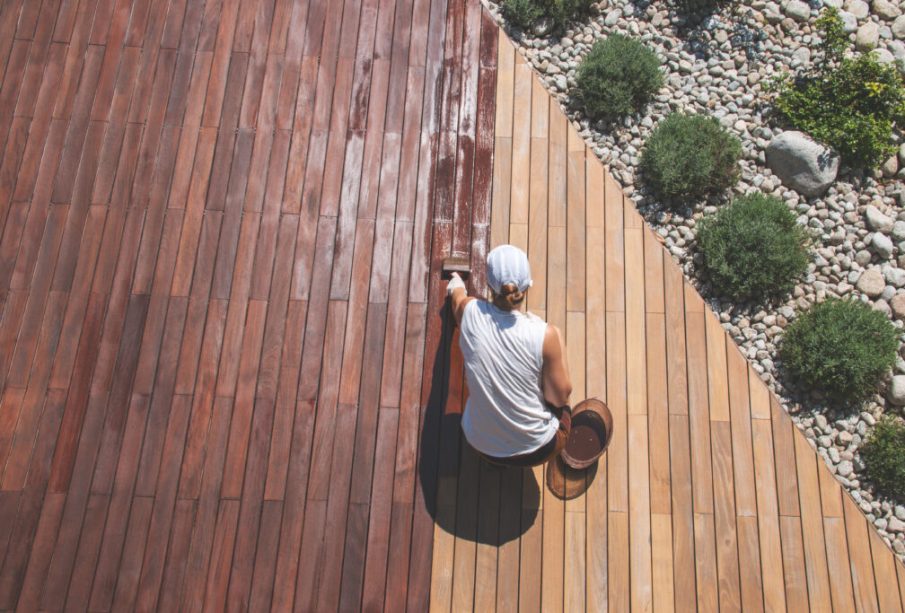
Penetrating oils behave differently. Deck Oiling with a professional-grade product allows the coating to breathe and wood to expand naturally all while releasing trapped moisture rather than allowing it to build up. Furthermore, oils with UV inhibitors in them tend to repair the lignin’s imbalance acting as a natural sunscreen and slowing the process of photodegradation down. This, in turn, limits the amount of gray that appears on the deck.
How you apply the coating can have a similar effect on penetration and eventual performance. In short, don’t just roll it on and forget it. Back-Brushing or using a brush immediately after application goes a long way in working the oil deep into the wood rather than let it stay on top. Top-pooling oil is bad news. It never penetrates, dries at the top, and eventually peels.
Seasoning New Timber Correctly
Freshly milled new wood requires some patience before a protective product can be applied, as most boards will be carrying levels of moisture left over from the milling process. In addition, durable hardwood species like Merbau and Spotted Gum contain tannins that can bleed out of the wood and affect the finish if they are not leached from the timber first.
The rule of thumb is to let newly installed decking weather for four to eight weeks before applying water repellent. If your time frame doesn’t allow this long to wait, consider using a chemical stripper based on oxalic acid, which will help remove the tannins and also brighten the timber surface. Skimping on this step won’t result in properly maintained timber as surface coating on tannin saturated wood will lead to premature peeling. The coating simply can’t bond firmly with the wood if it is packed with tannins.
Testing Readiness Before You Apply Anything
Many homeowners rush to apply a finish long before it’s necessary, over-applying on timber that’s too wet, or applying a new coat over an old sealer that’s still doing its job. The next thing you know, the finish is peeling, darkening, or it’s covered in mold. Save yourself the grief with the water drop test.
Sprinkle a few drops of water onto the deck surface. If they absorb within 30 seconds, the timber is ready to take a coating. If they bead up and sit on the surface, either the wood is still too wet or an existing finish is blocking absorption. Moisture content matters here. If the wood isn’t ready, the 30-second timer hasn’t started, repeat the water drop test regularly until it absorbs water and the clock starts. Your timber may be ready to coat. Most coatings require the timber to be below 15-18% moisture content before application. Applying oil or stain to wet timber traps moisture inside, which accelerates fungal decay from below while the surface looks protected.
Cleaning Isn’t Optional, Even on Clean-Looking Wood
Clean looking timber is not biologically clean. Mold spores in the grain will become active and spread under any film-forming finish. A deck wash designed to kill mold will open up the grain of the wood to absorb more finish.
Pressure washing can help, but it can also damage the wood causing a fuzzy surface. The more you fuzz the wood, the more you’ll have to sand it smooth before you can finish it. Use a wide fan tip on the wand. Keep it moving, and unless you want to etch your wife’s name into the splat board for posterity, never stop in one spot for too long or get too close. Let the wood dry for a couple days.
After power washing and sanding, apply a water-repellent finish that has a mildewcide. But first, take care of the areas that will absorb water most quickly: the end-grain and joints. Fungal decay always shows up first right here. Protection for the main coating from this kind of failure comes in a small can labeled end-grain sealer.
Protecting What You’ve Invested in
A well-built wooden deck can be a valuable investment for your property in the long run. But an improperly constructed or poorly maintained one can end up costing you big time. Prepping your timber deck for revitalization is essential to ensure the new finish will properly adhere to the wood, creating a long-lasting protective layer. The following steps will help you prepare your deck for a new coat of oil treatment.