A Comprehensive Guide to Managing Backyard Pool Debris After a Storm
When a storm rolls through, whether it’s a gentle shower or a roaring hurricane, all sorts of things end up in your pool in addition to rainwater. Some of the “ingredients” in storm water (dust, pollen, bacteria, and other biological material) would find their way into your pool anyway, but there’s usually a lot more of them in rainwater than in your usual fill water. It’s also very likely that your chlorine level has been severely knocked down.
Start With Safety, Not A Net
Before you touch the water, walk the perimeter. If there’s any chance the storm brought down power lines or damaged your outdoor lighting, stay well back. Wet electrical equipment and suspected wiring damage mean the same thing: switch the pool system off at the breaker – not at the unit itself.
Once you’re happy the area is safe, get the debris out quickly. Reach for a heavy-duty leaf rake rather than a skimmer net – leaves, mulch and bark release tannins as they rot, and tannins stain. On concrete or pebblecrete, that staining can become permanent in as little than 24 to 48 hours. Don’t wait around.
The Invisible Problem: What The Storm Actually Put In Your Water
The debris you can physically see is not the problem. The aesthetically pleasing “clean” pool is not the healthy pool. It’s more about the pollutants that you can’t see.
Rainwater can actually break your pool in one event. We know it has the soil, but it also carries phosphates into the water especially if it rains after a dry spell. Alkalinity is the buffering agent that protects chlorine and enables it to do its important work. Without alkalinity, chlorine is extremely weak. So you want to keep both of those levels steady. Low alkalinity has been shown to be an even bigger detriment to chlorine’s ability to fight bacteria and viruses in the water than even having no chlorine at all!
Check your chemistry before you shock. Most people don’t want to wait that long and just throw the shock in and wish for the best. But if you don’t check the pH and adjust the alkalinity, that $80 bucket of chemicals won’t do a bit of good. If the pH is too high, chlorine may drop to just 12% of its strength. Most shock lost due to out-of-range pH levels.
How To Run Your Filtration System After A Storm
After a storm, your centrifugal pump will need to work overtime, but you can’t push it before checking a few things first. Air may have gotten into the pump from the system or the pool cleaner line, so remove the strainer pot lid and fill the housing with water before putting the lid back on. Then slowly open the strainer pot’s air relief valve until water starts to come out. Do not overfill the strainer housing or skip opening the air relief valve, as this can cause the pump to lose prime.
The skimmer baskets should be inspected next. Top them up with water and if your skimmer has a floating weir, make sure it moves freely. Ensure that nothing is blocking the intake and then adjust the water level so it’s about halfway up the skimmer opening.
With the pump back online, select skimmer and floor drains and run the system for eight hours coming back frequently to supervise. Vacuum the pool only if you can run the vacuum without allowing debris to recirculate.
Chemical Rebalancing And When To Call For Help
Once you have shocked the pool you need to add an algaecide as a preventative measure. You don’t want to wait until you see green water as the bloom is already in full swing by then. Adding a dose of algaecide in the first 24 hours, in tandem with a proper chlorine shock, closes the window for algae to establish itself.
For pools that took on a lot of silt, or if the storm damage is more severe, this gets complicated quickly. Professional pool cleaning perth services will be able to deep sediment vacuum and test and correct your water chemistry all in one visit instead of going back and forth with testing and adding for a few days.
Managing Water Level And Structural Risk
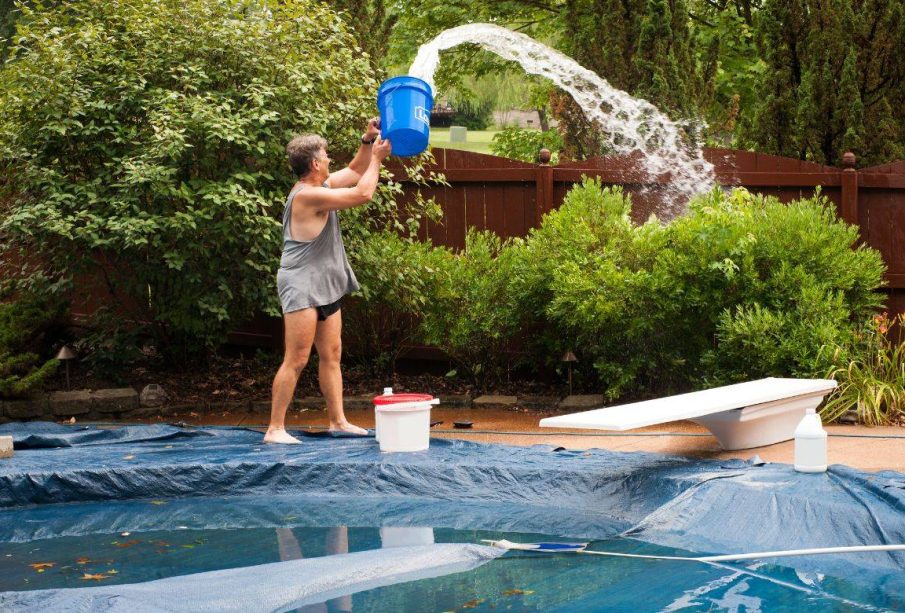
Extremely heavy rain can cause your pool to overflow. In order for the filtration system to function properly, you’ll need to drain it back down to the midpoint of the skimmer box. You can use a submersible pump for this, or you might be able to set your filter to waste and run the backwash hose to where you want the water to go.
What you should never do is drain the pool completely following an overflow. If the soil around your property is completely saturated, hydrostatic pressure can build up and actually push the pool shell up out of the ground. There is a hydrostatic relief valve at the bottom of the pool designed to prevent this, but it will only work if there is water in the pool. Keep water in it.
Getting Back To Swim-Ready
The effort you exert within that initial 48-hour timeframe is what makes the difference between a pool that recovers fast and one that demands a complete remediation. Remove the debris, correct the chemistry in the proper sequence, run the filter vigorously, and monitor your water level. The storm has passed – now it’s your move.